
Forty Summers In, SummerStage Asks What “Indie” Was Even For


By Glenn Paul and Lisa Cherifi
A pre-show panel questioned indie music’s future. Black Country, New Road, Horsegirl, and Sharp Pins answered from the stage.
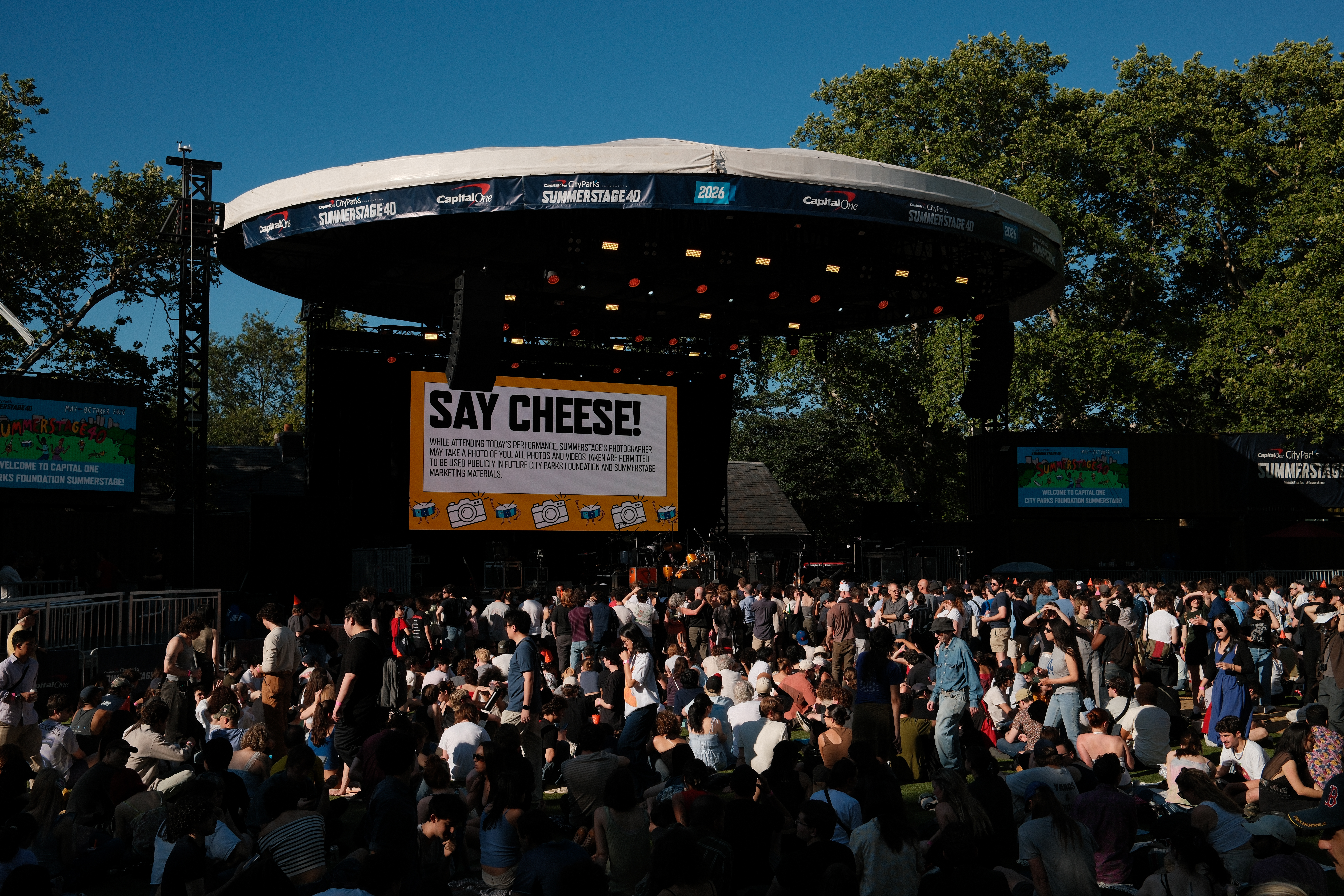
For forty summers now, Capital One City Parks Foundation SummerStage has been running one of the most radical experiments in American music: world-class artists across genres performing in public parks, for free. This Wednesday, at the festival’s Central Park flagship, Rumsey Playfield, that experiment took form in Black Country, New Road — one of the most acclaimed rock bands in the UK — playing to a packed field of New Yorkers. They didn’t need a ticket, a presale code, or the emotional scars of a Ticketmaster queue, they only had to walk in. The crowd looked like a casting call for the last twenty years of indie rock: jorts central, a sea of tote bags, band shirts layered over band shirts, a glittering reef of tiny ear hoops, and at least one person still in hospital scrubs who had clearly clocked out and sprinted for the park.
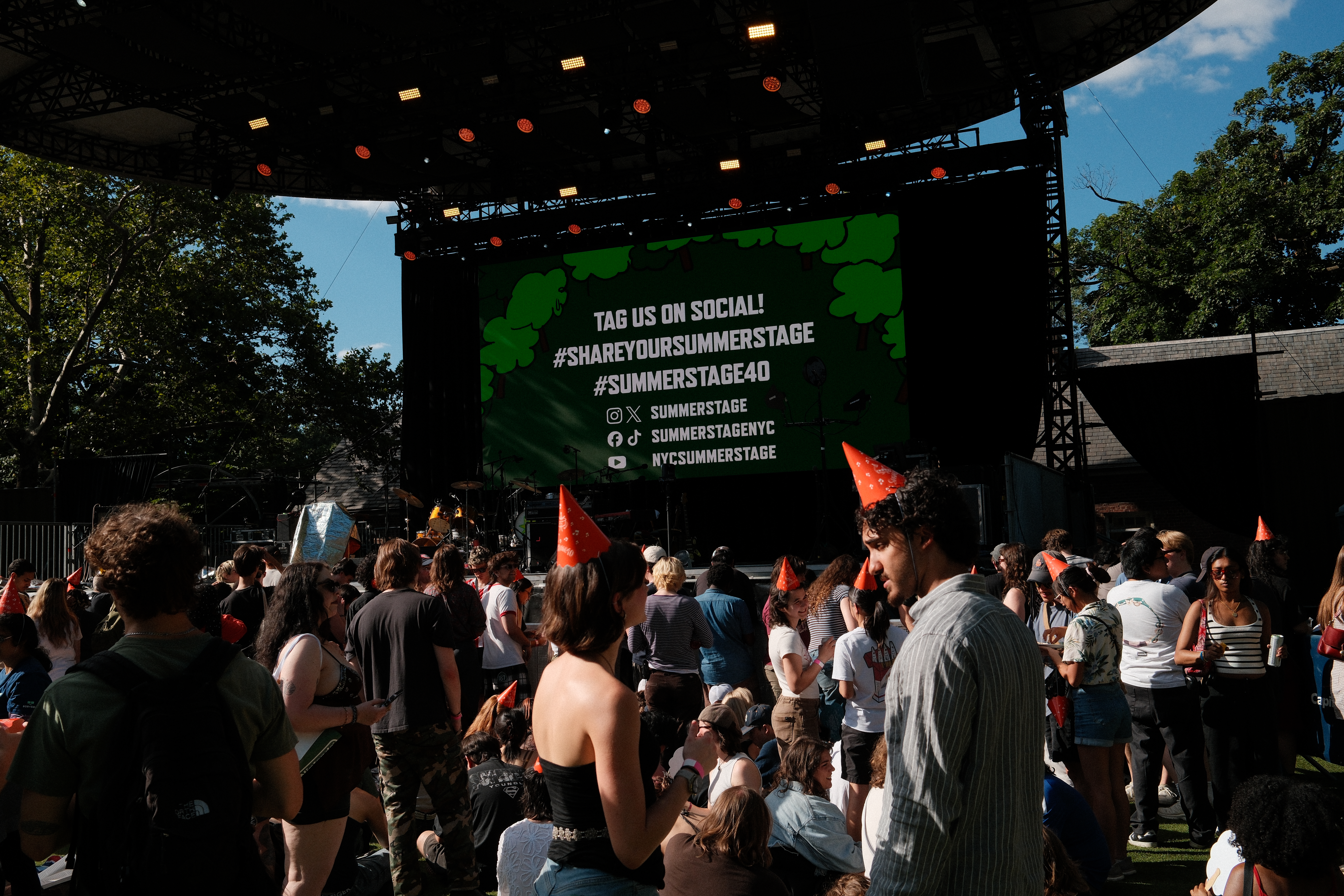
That openness was, fittingly, the day’s whole theme. Hours before the music began, a panel at the Pergola asked, “What does ‘indie’ mean today?” The conversation was candid about the anxieties of the moment: how a band once needed little more than a couple of blogs and a tour to find an audience, while today, discovery often demands a carefully curated online identity before the music is even heard. Panelists spoke about search engines increasingly surfacing AI-generated summaries over human-authored criticism, and about indie’s DIY roots—when kids too young to get into clubs built their own scenes in basements and living rooms instead. If indie once meant carving out space in a small pond, today it can feel like trying to stay afloat in an ocean of endless content.
It’s a heavy question to pose before a free concert. But the show that followed offered a different answer. Indie has never been just a sound or a business model—it has always been a community built around making space for people. Three bands with deep DIY roots took the stage in the middle of Central Park, playing to one of the most mixed crowds in the city: die-hard fans at the barricade, curious passersby, tourists, students, and anyone else who happened to wander in.
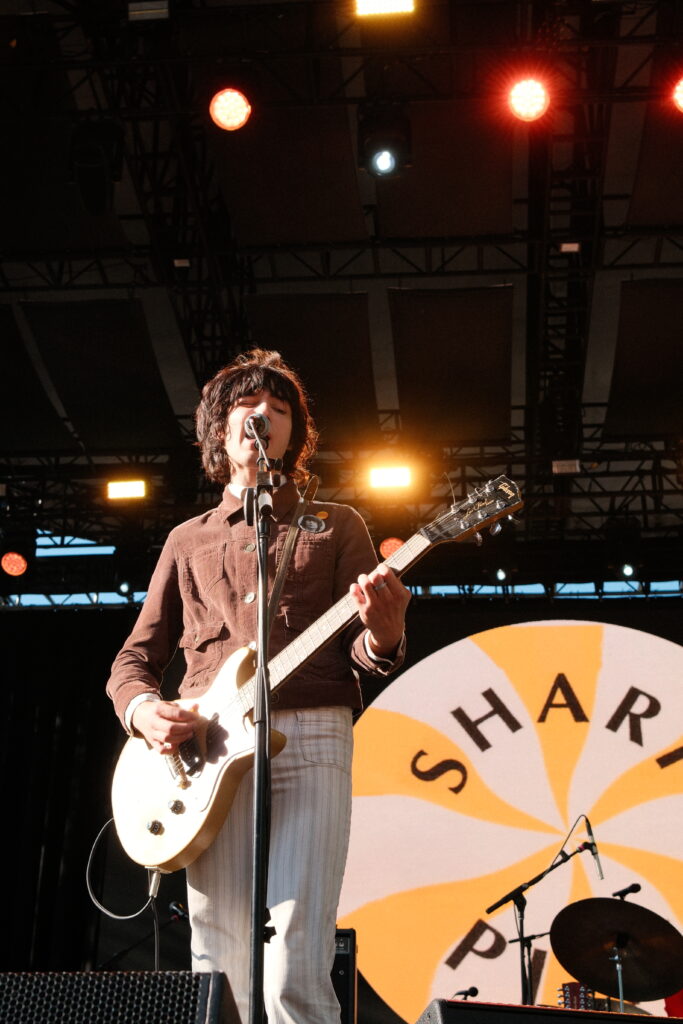
Fortunately, the evening didn’t linger in theory for long. Sharp Pins commit to their eclectic, almost-’70s aesthetic so completely that you half-suspect you’ve time-traveled — and the whole live band is in on the bit, kooky and locked in at once. The songs, many of them new, were bouncy, a little silly, and built on tight, sticky melodies. They had a Beatles-esque familiarity, almost frictionless to move to, especially if you were raised by music-obsessed parents. Kai is unafraid to jump and jam across the stage, and by the end, has won an unfamiliar crowd fully over to the band’s antics.
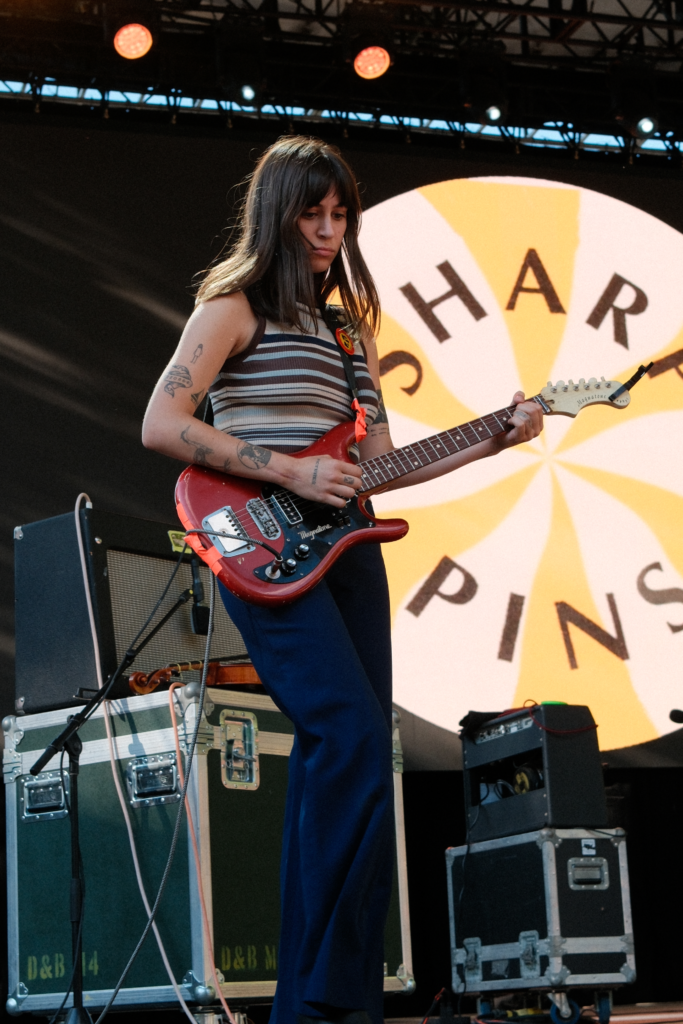
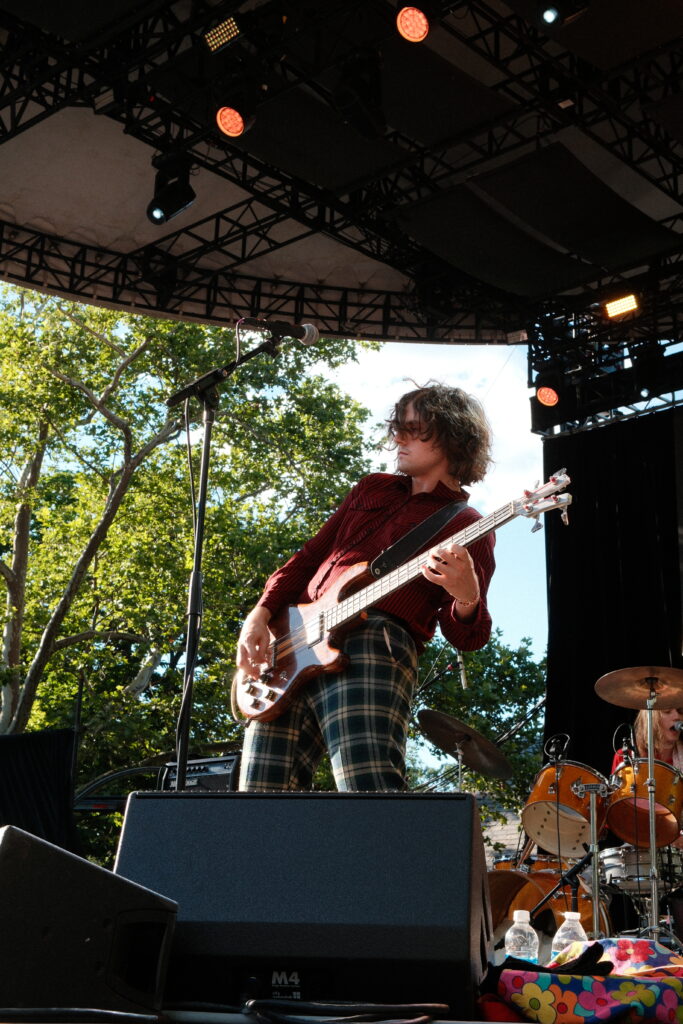
Horsegirl, a Brooklyn-based avant-garde power trio of two singers and a drummer, followed. Their songs let harmony and melody take the reins, with each member constantly folding back into the others.
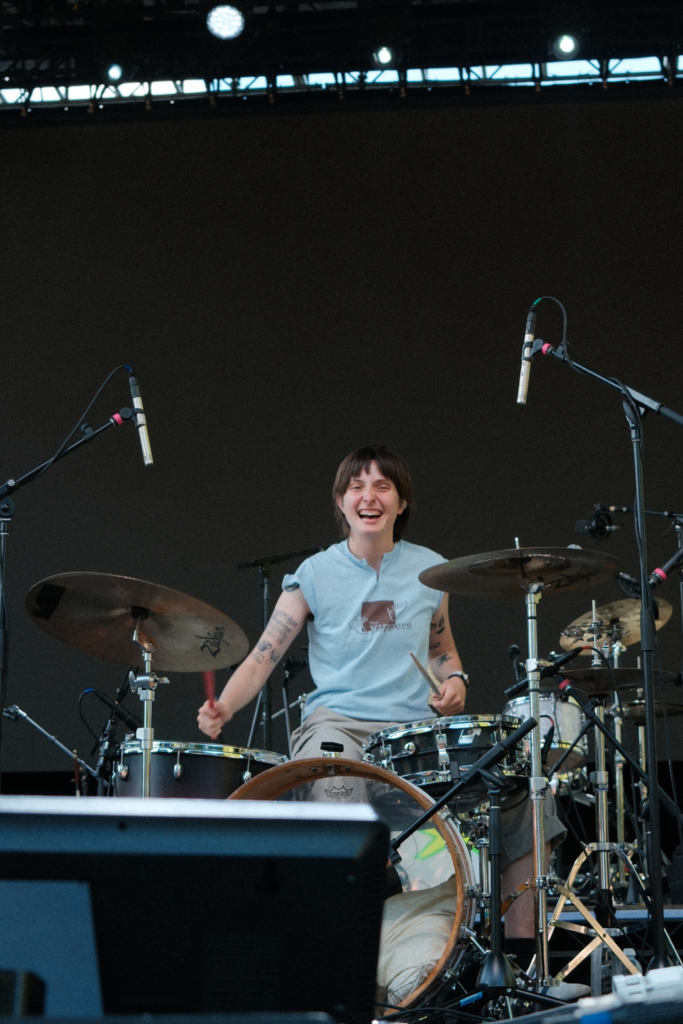
Behind it all sat drummer Gigi Reece, smiling through every fill as if keeping time was the easiest, happiest thing in the world. It was hard not to watch her, and nearly impossible not to smile back.
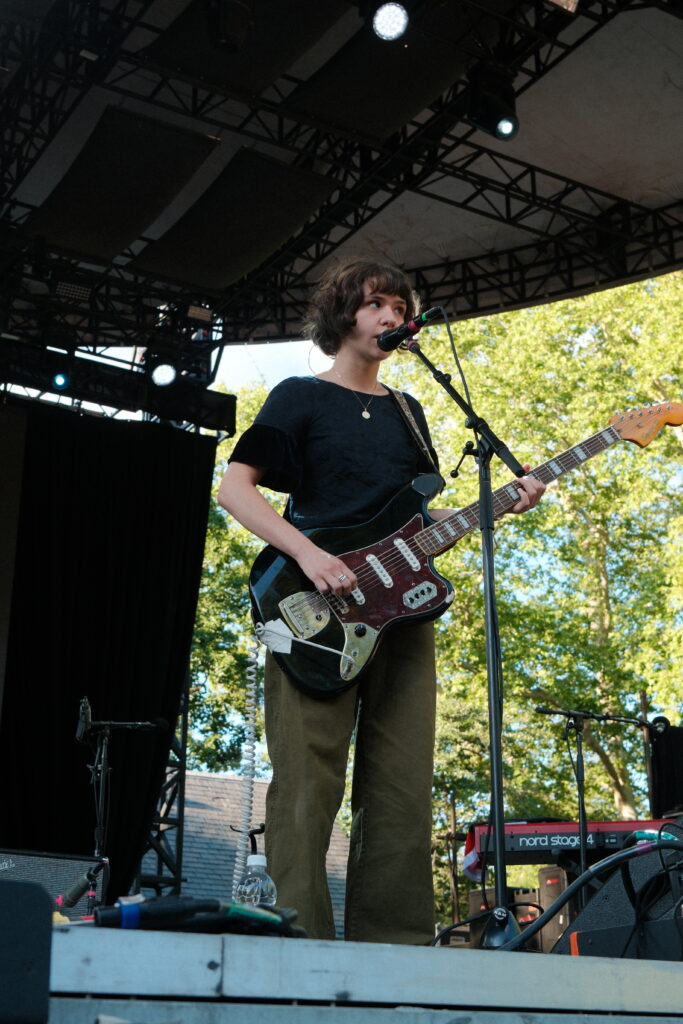
Mid-set, a guitar string snapped. Luke, a member of Black Country, New Road (BC,NR), walked over and handed across his own guitar. If the afternoon panel was searching for indie’s ethos, it was hard to imagine a better answer.
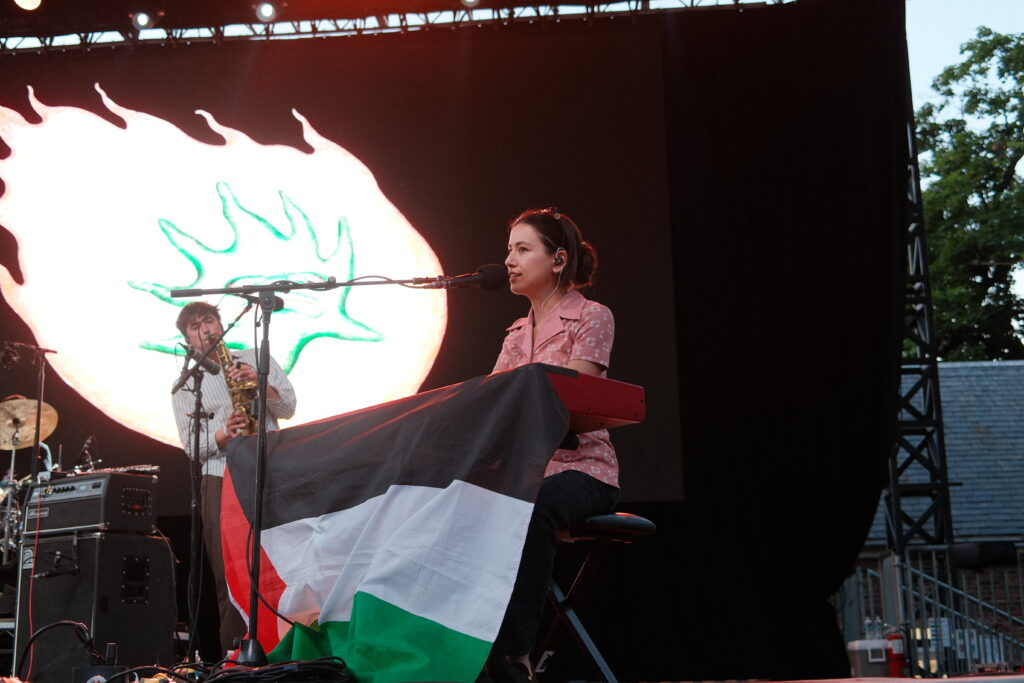
Then came Black Country, New Road. Live, the sextet is a marvel of cooperation: members drift between roughly forty instruments in an elaborate game of musical chairs, trading places and parts with the precision of a chamber ensemble. Three vocalists—Tyler Hyde, Georgia Ellery (also of Jockstrap), and May Kershaw—each inhabit a distinct emotional register, giving the set a remarkable range.
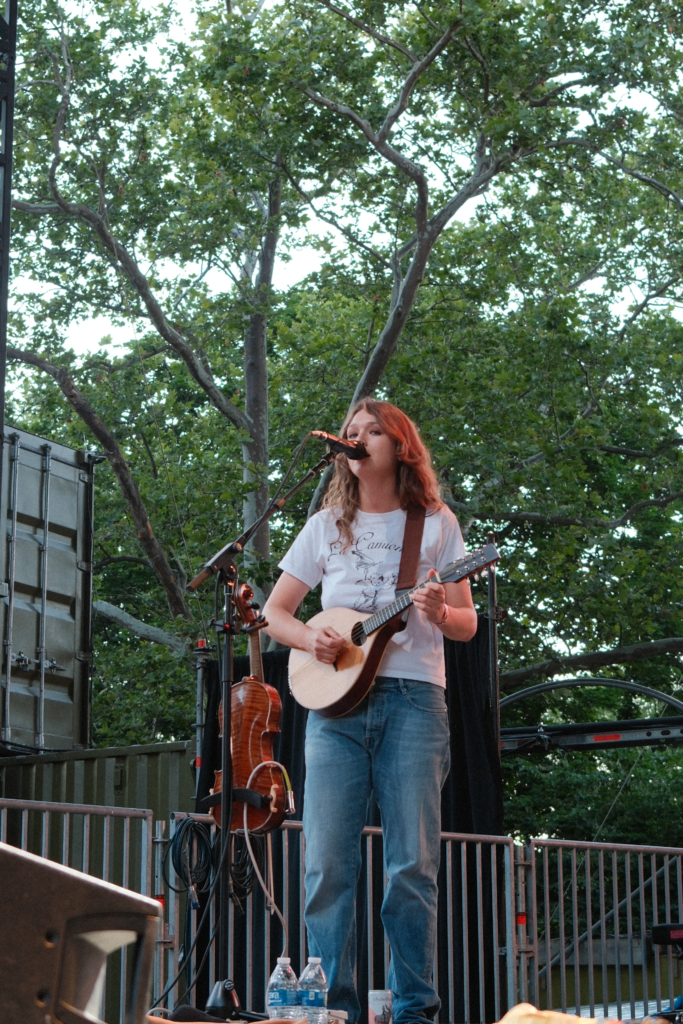
At one point, nearly everyone onstage but Kershaw picked up a recorder, as their songs unfolded through an intricate choreography like a shifting puzzle that always fits. A Palestinian flag remained draped across the piano throughout the set, reflecting the band’s belief that a concert can be more than a performance—it can also be a place to keep important conversations alive.
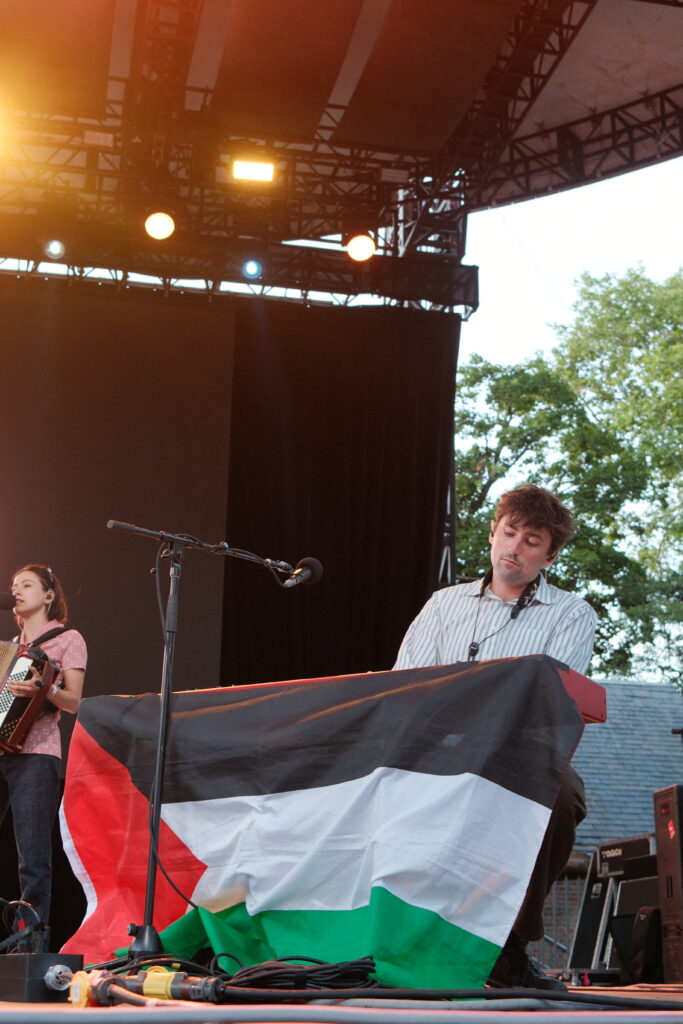
The crowd, of course, made it a New York night. A spontaneous “Knicks in 5!” chant drew a perfectly dry response from drummer Charlie Wayne, six British art-rockers, and Madison Square Garden energy colliding for ten delightful seconds. The emotional center arrived with a rare “Turbines/Pigs” performance. Framed by the trees of Central Park, the band stretched silence as carefully as sound, mastering not only the explosive crescendos but the held breath before them. For ninety minutes, the field moved between jubilation and quiet awe.
Forty years in, this bill felt like the clearest expression yet of what SummerStage has always done best. BC, NR’s album Forever Howlong could easily spend its life inside sold-out theaters and carefully curated audiences. Instead, on a perfect Wednesday evening, it belonged to everyone: college students, office workers fresh off the train, longtime fans, a Japanese tour group, and the person who wandered over simply because they heard music in the park. The panel started the afternoon by asking what “indie” means today. SummerStage answered this by opening the gates. In an era when technology and artificial algorithms increasingly determine how music is discovered and who gets seen, there was something quietly radical about returning to a public park, where anyone could wander in, stay awhile, and become part of the audience.
If you are in the city this summer, be sure to check out the rest of their free concerts across all boroughs. They have a pretty exciting lineup.
Photos taken by Glenn Paul